Team CommUNITY: protecting and mobilizing communities most at risk
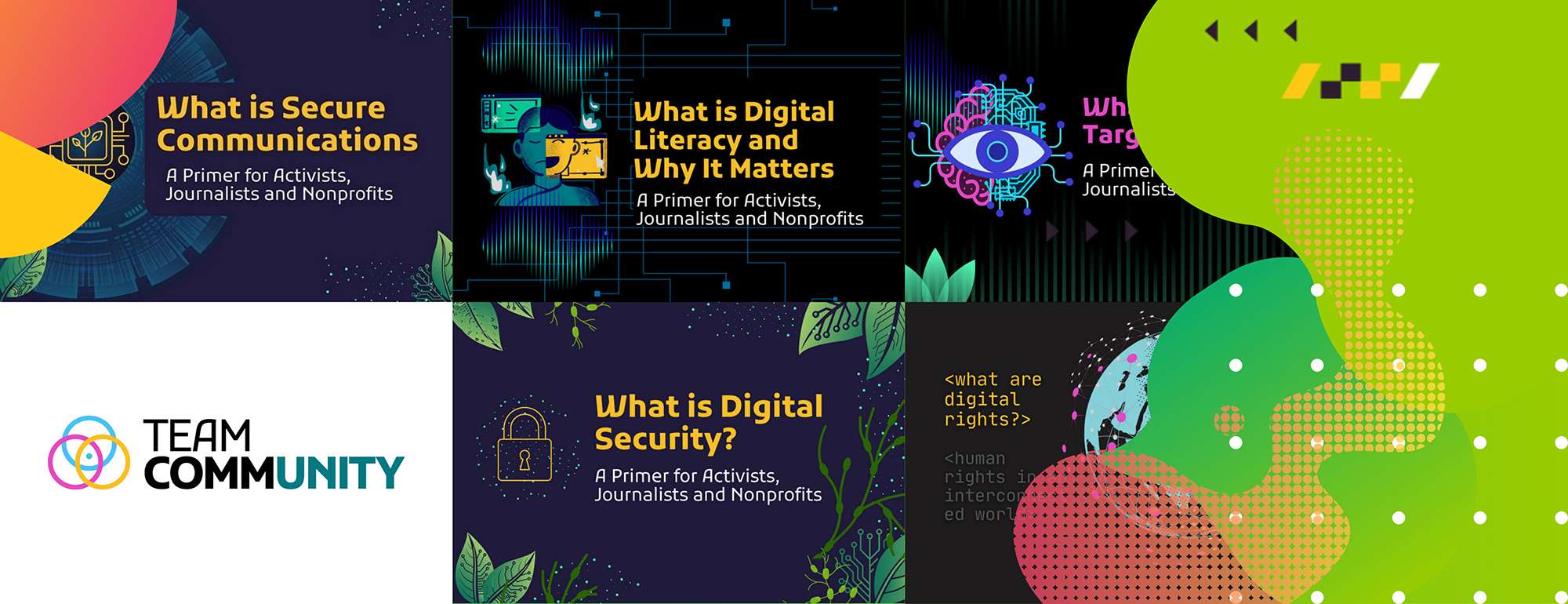
Digital Rights is an emerging field and community of practice confronting the most pressing technological challenges impacting human rights and social justice in this era — from online surveillance and censorship, to disinformation and the growing societal impacts of artificial intelligence — all of which have profound implications for people and communities worldwide.
The digital rights field has been rapidly shrinking due to burnout, historic funding cuts, and direct attacks from adversaries meant to destabilize the field. This is further exacerbated by the steep onboarding knowledge required to enter the field, as it demands cultivating expertise in technology and security. Combined, this is directly resulting in less security and safety resources and support for civil society, journalists, and defenders across all regions, and less people mobilized effectively to confront these new technological, digital rights challenges.
Team CommUNITY confronts these challenges by devoting themselves to organizing and creating community spaces and capacity-building initiatives designed to grow, mobilize, and create solidarity between digital rights networks and at-risk communities around the world. Their community reflects this mission — represents more than 120 countries with 51% of community members living in the Global Majority and 54% identifying as women or gender non-conforming.
By organizing their annual Global Gathering and virtual safe community spaces, keeping the digital rights community up-to-date through a weekly newsletter, growing networks through their popular Job Board, providing educational and leadership development opportunities, and building diverse resources for beginners, such as their wiki-based Knowledge Center, this team provides a wide spectrum of support from networking and mentorship, to the creation of standard-setting safety and security tools and protocols for events and community spaces.
We had an opportunity to ask Team CommUNITY a set of questions about their work what drives them. Take a deep dive into their philosophy in the following paragraphs features their answers.
We highly recommend that you join this community by signing up to their newsletter and read their community resources. They also has an awesome series of blog posts featuring members of their global community, and introductory primers on important digital rights and security topics impacting civil society.
What first drew you to this work?
Many in our team became interested in this work because of our family history or our personal experience.
Who do you hope benefits most from your work? Who is at the heart of the impact of your work?
Folks experiencing the most acute forms of digital repression, which tend to be from communities and networks that are vulnerable, excluded, or marginalized, and at-risk journalists and media workers. Additionally, the projects supporting these communities’ security and safety needs, or are advocating for their digital rights
What does a genuinely privacy-respecting or ethical technology ecosystem actually require — beyond good intentions?
Currently, the digital rights field is incredibly fragile because of historic funding cuts, so unfortunately, there is need in all areas — foundational critical projects are closing, existing support is crumbling, digital rights defenders are burning out or facing precarious labor contexts, and adversaries are pumping billions of dollars in honing in their strategies, tools, and capacity. While each region and at-risk community has different priorities, more funding is needed to stabilize this critical work. Without it, we will continue to see the shrinking of civil society spaces across all regions, including the Global North.
To get this support, we also need the general public to grasp the depth of how democracy, freedom of expression, journalism, human rights, and social justice are being dangerously impacted by these technological harms, particular in this moment in history, and why protecting digital rights are important.
Can you name one misconception people often have about digital security, privacy, or technological ethics?
These terms unfortunately can't be explained in a 30 second media bite, which makes our storytelling in the digital rights space challenging. This also means it is harder to mobilize mass population(s) to protect digital rights values and stop the numerous censorship, surveillance, and nefarious technological mechanisms being implemented across the globe, while also ensuring defenders and journalists have the security and safety they need to protect themselves from direct attacks designed to silence them.
What tensions or contradictions do you wrestle with in building and developing your work?
Security and safety of community spaces requires investment, infrastructure, and expertise. Additionally, the most at-risk communities need tremendous support to overcome the steep barriers they face to enter the digital rights field and acquire the security knowledge they need to protect themselves and advocate for their digital rights.
Navigating this during a period where adversaries are rapidly sophisticating offensive strategies and tools they use, while the digital rights community is navigating historic funding cuts, means growing the community must be done at a slower pace than what is needed by civil society worldwide.
What feels particularly urgent right now?
To stabilize the digital rights community of practice so that knowledge, projects, and critical projects are not lost forever.
What keeps you motivated despite the challenges of this work?
The survival and protection of our communities means there is no other option than to continue forward. The battles we are currently fighting impacts not just us, but all future generations.
What is something people rarely see or understand about the labor behind this kind of work?
There is a lot of emotional labor behind the scenes that has real impact on the people doing the work. For example, we have noticed that many people develop auto-immune diseases as a result of the stress of the work. This impacts primarily women and individuals from marginalized communities. However, there are few resource to help these folks, let alone stable work that provides health benefits.
What is one digital habit or practice you think more people could benefit from when adopted?
Thinking twice before posting data in any type of digital space — whether in text, a social media post, or documents. We underestimate how our data can be used against us.
What gives you hope about the future of technology, digital security, and/or privacy?
People's resilience. Community networks. Solidarity across borders.
What advice would you give to someone newly entering this field?
First, find ways to ensure that the skills you are developing in digital rights field can be easily translated to other fields. Employment in digital rights continues to be precarious, and your long-term well-being matters. You need to put your mask on first before you start helping others.
Secondly, the body of knowledge may seem overwhelming — developing a security mindset takes time — but it becomes second nature eventually. The digital rights community has some of the most amazing, brilliant, and good-hearted people who would love to give you support!